Roofing materials comparison for Fort Worth TX homes

Best Roofing Materials for Fort Worth, TX Homes in 2026

A practical guide to choosing the right roofing material for North Texas heat, hail, and high winds.

Roofing material options for Fort Worth Texas homes

Choosing the right roofing material for a Fort Worth home is not a one-size-fits-all decision. Tarrant County sits squarely in a climate zone that demands a lot from a roof: summer temperatures that push past 105 degrees Fahrenheit, hailstorms that can drop golf-ball-sized ice in minutes, sustained winds topping 60 mph during severe weather events, and UV radiation intense enough to degrade lesser materials within a decade. The good news is that the roofing market in 2026 offers better options than ever for North Texas homeowners. This guide breaks down the most common materials, their real-world performance in the DFW area, and how to weigh the trade-offs before making one of the largest investments you will make in your home.

Why the Fort Worth Climate Changes the Equation

Many roofing guides are written with a national audience in mind. What works well in Seattle, where the concern is moisture and moss, may perform poorly in Fort Worth, where the primary enemies are UV degradation, thermal cycling, and impact damage from hail. The Texas Department of Insurance tracks hail loss data closely, and the DFW area consistently ranks among the most hail-active metropolitan areas in the country. When comparing materials, prioritize Class 4 impact resistance ratings, high wind ratings (look for Miami-Dade or UL-listed wind certifications), and reflectivity values that reduce attic heat gain during summer.

Fort Worth falls under International Residential Code (IRC) jurisdiction as adopted by the City of Fort Worth and Tarrant County. The city requires permits for full roof replacements and mandates that new roofing meet minimum wind resistance standards — currently 130 mph for most residential applications. Some neighborhoods governed by homeowner associations also have restrictions on material type and color, so it is worth reviewing your HOA documents before committing to a material.

Asphalt Shingles: The Workhorse of Fort Worth Roofing

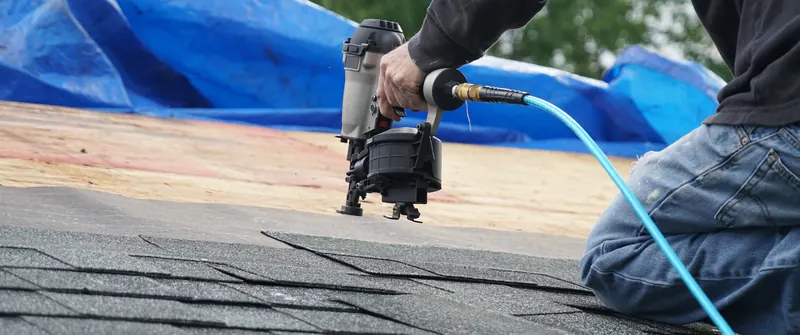
Asphalt shingles remain the most installed roofing material in Fort Worth and across the entire DFW metroplex, and with good reason. They offer a strong value proposition: reasonable upfront cost, a wide range of colors and styles, broad contractor availability, and — when you choose the right product — solid performance against the elements.

Three-Tab vs. Architectural Shingles

Three-tab shingles are the older, thinner product that many homeowners grew up seeing. They carry a lower price tag but also a lower wind rating (typically 60 to 70 mph) and a shorter lifespan in the Texas climate — often 15 to 18 years before replacement is warranted. In most cases, SkyGuard recommends against three-tab shingles for new installations in Fort Worth simply because the cost savings are eroded by earlier replacement cycles.

Architectural shingles (also called dimensional or laminate shingles) are the modern standard. Their multi-layer construction creates a thicker, heavier product that carries wind ratings of 110 to 130 mph depending on the manufacturer, and their dimensional profile adds visual depth that enhances curb appeal. A quality architectural shingle from a manufacturer like GAF, Owens Corning, or CertainTeed will carry a 30-year limited warranty and perform well for 25 or more years in Fort Worth with proper attic ventilation.

Impact-Resistant Shingles: A Fort Worth Priority

The most important upgrade available in the asphalt shingle category for Fort Worth homeowners is the Class 4 impact-resistant designation. These shingles incorporate a modified polymer backing that dramatically reduces the risk of cracking or bruising during a hailstorm. Beyond the protection itself, many insurance carriers in Texas offer premium discounts of 10 to 30 percent for homes with Class 4 rated roofing — a discount that can pay back the modest upcharge within a few policy renewal cycles. If you are replacing your roof in Fort Worth, asking for Class 4 impact-resistant shingles should be a default part of the conversation. Our team can walk you through compatible options during a residential roofing consultation.

Metal Roofing: The Long-Term Investment

Metal roofing has moved well beyond the corrugated panels of agricultural buildings. Today's residential metal roofing systems — including standing seam steel panels and steel or aluminum shingles — offer a compelling package for Fort Worth homeowners who plan to stay in their homes for the long term.

Performance in North Texas Conditions

A properly installed standing seam metal roof carries wind ratings of 140 mph or higher and is essentially impervious to hail damage at typical storm intensities. Unlike asphalt shingles, metal does not granulate, crack, or absorb moisture. Lifespan estimates for quality steel roofing in Texas range from 40 to 70 years, meaning a metal roof installed today could well outlast the mortgage on the home. Metal roofing also performs exceptionally well on the energy efficiency front: cool-roof coatings reflect a significant portion of solar radiation, reducing attic temperatures and lowering summer cooling loads — a meaningful benefit given that Fort Worth homes can run air conditioning from May through October.

Considerations and Trade-offs

The primary barrier to metal roofing is upfront cost. Installed prices in the Fort Worth area for standing seam steel typically run two to three times the cost of a comparable architectural shingle installation. The noise factor during rain events, while often overstated, is a real consideration — though proper underlayment and insulation reduce this substantially. Metal roofing also requires specialized installation knowledge; not every general roofing contractor has the tooling and training for standing seam work. SkyGuard's crews are trained in both panel systems and metal shingle applications. See our residential roofing services for details on what we offer.

Tile Roofing: Beauty and Durability at a Premium

Concrete and clay tile roofing is a common sight in Fort Worth's established neighborhoods and in newer developments that favor a Mediterranean or Spanish Colonial aesthetic. Tile's durability is well established — properly installed clay tile can last 50 years or more — and it handles heat exceptionally well, with the air space beneath individual tiles providing natural ventilation that keeps attic temperatures lower than with direct-lay systems.

The practical challenges with tile in Fort Worth involve weight and impact. Tile is significantly heavier than shingles or metal, and older homes may require structural evaluation before installation to confirm the framing can support the additional load. While concrete tile carries a Class 4 impact rating and handles most hail well, large hail (two inches or larger) can crack individual tiles, and replacement matching can be difficult if the original tile line is discontinued. Installation costs are high, and the pool of qualified tile installers in the DFW market is smaller than for other material categories.

Slate: Premium Performance, Premium Price

Natural slate is the most durable roofing material available, with documented installations exceeding 100 years in appropriate climates. In Fort Worth, slate performs well from a heat and UV standpoint but faces the same structural weight concerns as tile, amplified — slate is even heavier. The cost of natural slate in North Texas, including freight from quarries in Vermont or Pennsylvania, makes it one of the most expensive residential roofing options available. Synthetic slate products (made from polymer composites) offer a reasonable middle ground: they replicate the look of natural slate, weigh significantly less, carry Class 4 impact ratings, and cost less — though still substantially more than asphalt shingles.

Flat and Low-Slope Roofing Materials

Some Fort Worth homes — particularly mid-century modern designs and home additions — include flat or low-slope roof sections. These areas require entirely different materials and installation approaches than steep-slope roofing. The most common systems in the DFW residential market are TPO (thermoplastic polyolefin) membranes, modified bitumen, and EPDM rubber membranes. For commercial buildings, built-up roofing (BUR) and PVC membranes are also prevalent. Flat roof sections are more susceptible to ponding water and UV degradation, making material selection and proper drainage design critical. Our team handles both residential and commercial flat roofing throughout the Fort Worth area.

Making the Right Choice for Your Home

No single material is the best choice for every Fort Worth home. A homeowner planning to sell within five years and operating on a tight budget is best served by quality architectural shingles with a Class 4 impact rating. A homeowner with a 30-year horizon and the ability to invest upfront should seriously evaluate metal roofing for the long-term cost and performance advantages. Tile and slate make sense for specific architectural styles where aesthetic continuity matters and the structural conditions are appropriate.

The most important variable is installation quality. A mediocre installer will shorten the lifespan of even the best material, while a skilled crew will maximize the performance and warranty coverage of whatever system you choose. Before any work begins, a professional roof inspection can identify existing decking damage, ventilation deficiencies, and flashing conditions that need to be addressed as part of the project. If budget is a concern, ask about financing options — SkyGuard offers flexible payment plans to help Fort Worth homeowners access the right solution without compromise.

Ready to discuss which material is right for your Fort Worth home? Contact SkyGuard Roofing Solutions at (682) 330-5088 for a free estimate and honest material guidance from a team that has been serving Tarrant County for years.

Related Posts

Ready to Upgrade Your Fort Worth Roof?

SkyGuard Roofing Solutions serves Fort Worth and the entire DFW metroplex with expert installations, free estimates, and honest guidance on material selection.